From Compliance to Culture: A Practical Guide to Mastering the Safety Audit
Article Summary
Safety is the top priority for any organization. Auditing your safety program and taking a proactive approach is the best way to stay safe. Learn how to create and execute a comprehensive safety audit that exceeds OSHA requirements and builds a culture of safety in your organization.
- Safety audits help you avoid OSHA citations, workers’ compensation claims, litigation, increased insurance premiums, equipment downtime and reputational damage.
- A comprehensive safety audit consists of four steps: Plan, Do, Check and Act.
- For a safety audit to be successful, it must be reviewed and iterated upon continuously.
A practical guide to mastering the safety audit
For any organization, ensuring that every employee returns home safe and sound at the end of the day is the ultimate priority. The best way to achieve this goal lies in shifting from a reactive approach – addressing problems after an incident occurs – to a proactive one that anticipates and mitigates hazards before they cause harm. And a thorough safety audit is a powerful tool to make this change.
Ready to start your own safety audit? Brady offers the products and services you need to build a world-class safety program.
About Brady Safety Services
What is a safety audit?
A truly effective safety audit is more than a simple checklist. It’s a process that helps you uncover gaps and identify hidden risks to transform your workplace into a safer, more efficient space. Instead of focusing on achieving the bare minimum for OSHA compliance, these audits become about building a safety culture that sets you apart.
Performing regular safety audits drives continuous improvement and prevents your organization from slipping into a “that’s the way it’s always been done” mindset. There's always room for improvement, and avoiding potential fines is just the start. Better safety procedures can help limit workers’ compensation claims, litigation, increased insurance premiums, equipment downtime and damage to your company’s reputation.
Ready to get started? Here's a practical, four-step guide to conducting a meaningful safety audit that drives continuous improvement and protects your greatest asset: your people.
Before you begin: The honest self-assessment
Take an honest, objective look at your organization's current safety foundation, not just what happens on the floor. This isn’t about pointing fingers; it’s about establishing a baseline so you know where you are and can plan where you want to go.
Ask yourself and your team a few critical questions:
- What are the common pitfalls or recurring minor incidents we are currently facing?
- Is our safety training adequate and, more importantly, is it understood by everyone who needs to follow it?
- Are our written programs and procedures up-to-date, or do they reflect operations from years ago?
- Are our written procedures readily available for anyone to review?
- Do our employees feel empowered to speak up about safety concerns? Or do they fear retaliation for rocking the boat?
The answers to these questions will provide crucial context and help you focus your auditing efforts where they're needed most.
The framework for success: A four-step cycle for continuous improvement
The most effective way to approach an audit is through a structured, repeatable methodology known as the Plan-Do-Check-Act (PDCA) cycle. This four-step management tool ensures that your audits are not just one-off events, but rather part of a system of continuous improvement.-
The framework for success: a four-step cycle for continuous improvement
A successful audit doesn't happen by accident; it requires thoughtful preparation. If you’re new to this process, it’s vital to make your scope and objectives as defined as possible and to put together realistic timelines. Are you auditing a specific process, a single department or an entire facility? What are you hoping to achieve? How do you measure success?
Next, gather your resources, including:
- Documentation: Pull past audit reports, Standard Operating Procedures (SOPs), training logs and any other relevant paperwork. This historical data can reveal patterns you might otherwise miss.
- People: Safety is not the sole responsibility of one person. Involve others in your audit. A department supervisor, a long-tenured operator or even a newer employee can provide an invaluable extra set of eyes. Their different experiences and deep knowledge of specific work areas can reveal issues that you may not catch on your own.
-
Step 1: Plan – Define your mission
A successful audit doesn't happen by accident; it requires thoughtful preparation. If you’re new to this process, it’s vital to make your scope and objectives as defined as possible and to put together realistic timelines. Are you auditing a specific process, a single department or an entire facility? What are you hoping to achieve? How do you measure success?
Next, gather your resources, including:
- Documentation: Pull past audit reports, Standard Operating Procedures (SOPs), training logs and any other relevant paperwork. This historical data can reveal patterns you might otherwise miss.
- People: Safety is not the sole responsibility of one person. Involve others in your audit. A department supervisor, a long-tenured operator or even a newer employee can provide an invaluable extra set of eyes. Their different experiences and deep knowledge of specific work areas can reveal issues that you may not catch on your own.
-
Step 2: Do – Conduct a field audit
With your plan in place, it’s time to get out on the floor. The "Do" phase is about information gathering, and it involves three key actions:
- Observe: Sometimes the most powerful thing you can do is simply watch. Observe a production line or work process for an extended period. Watch each step of the process as though you had never seen it before. Make sure to observe different crews, changeovers and project types. How does it actually run? What is going well? Where are the bottlenecks or potential hazards?
- Interview: If you see something that seems unusual or unsafe, engage directly with the employees involved. Approach them with genuine curiosity, not accusation. Asking, "Hey, can you help me understand why you do it this way?" will yield far more insight than just pointing out a flaw. It helps you understand the context and reasoning behind their actions. Employees can also provide insights into where the current process fails or could be improved. Soliciting feedback doesn’t just provide insights, it promotes a cooperative safety culture that everyone is responsible for.
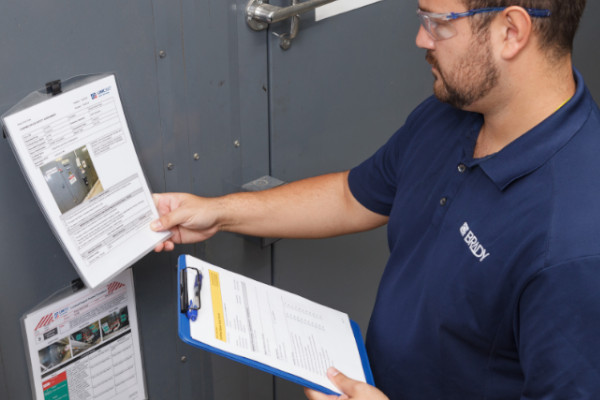
- Document: Don't rely on memory alone. Thorough documentation is absolutely critical. Take photos and videos (where permitted), write detailed notes and collect relevant records. This information is the raw material you'll use to analyze your findings and make a compelling case for process changes.
-
Step 3: Check – Analyze your data and find root causes
Once you've collected your data, the next step is to make sense of it. This analysis is where you turn observations into actionable insights.
- Compile and organize: Start by compiling your findings into a structured report. Organize your photos, notes and observations.
- Perform trend analysis: Use a spreadsheet tool like Microsoft Excel or Google Sheets to log your findings. Over time, as you conduct more audits, this data will become incredibly powerful. It will allow you to spot long-term trends and identify common threads among different findings. Are you seeing similar issues across multiple departments?
- Quantify your results: Data is persuasive. If you have to present your findings to your boss or another department, turning your data into simple charts or graphs makes it visual and easier to understand. A chart showing a recurring issue is much more impactful than a simple list.
- Determine root causes: The ultimate goal of the "Check" phase is to dig deeper than the surface-level symptoms. A missing machine guard is a problem, but why was it missing? Was the operator not trained, was it removed for maintenance and not replaced, or is it fundamentally hindering their work? Identifying the root cause is the only way to implement a solution that lasts.

Step 4: Act – Drive real change and monitor your progress
The final and most important step is to act on your findings.
- Develop and implement solutions: Based on your root cause analysis, develop corrective actions. These solutions should be practical, targeted and designed to prevent the issue from recurring.
- Monitor your progress: This is where many safety programs falter. Implementing a fix is not the end of the process. You must continuously monitor your progress to ensure the solution is working as intended. If not, be prepared to make adjustments. Avoid the compliance trap of thinking, "I'm in compliance now, so I don't have to pay attention anymore." Safety is a journey, not a destination.