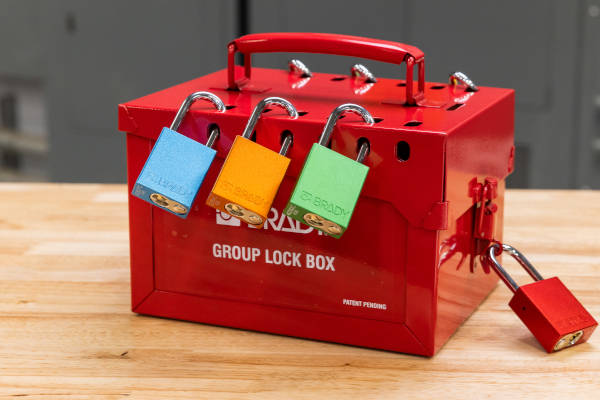
Sterile Lockout Tagout for Food and Beverage Facilities
Workers in food and beverage facilities have to balance production and operations with maintaining safety for employees and consumers. But when maintenance meets stringent sanitation requirements in these environments, mediocre safety processes and products fall short.
Lockout Tagout (LOTO) under OSHA 29 CFR 1910.147 in food and beverage facilities needs to integrate seamlessly with food safety standards set by the FDA, USDA and other regulatory bodies. Take a look at what's common across industries in any successful LOTO program as well as where additional considerations need to be taken into account.
Required lockout elements no matter the industry
To ensure safety and compliance under OSHA 1910.147, successful LOTO programs contain six key components. This proven roadmap helps ensure employee safety, OSHA compliance and operational efficiency
- Documented Program: Establishing and writing down your full energy control policy
- Machine-Specific Procedures: Creating and documenting detailed steps for controlling energy for each piece of equipment
- Isolation Point Marking: Clearly identifying all valves, switches and breakers with labels or tags
- Training and Audits: Adequately training employees and conducting periodic inspections to ensure effectiveness
- Proper Devices: Providing the right LOTO devices for every isolation point
- Sustainability: Maintaining a culture of continuous improvement through regular program reviews and required annual audits
For a deep dive into each step, read our complete guide on the 6 Elements to an OSHA-Compliant Lockout Tagout Program.
Standard lockout solutions won't hold up
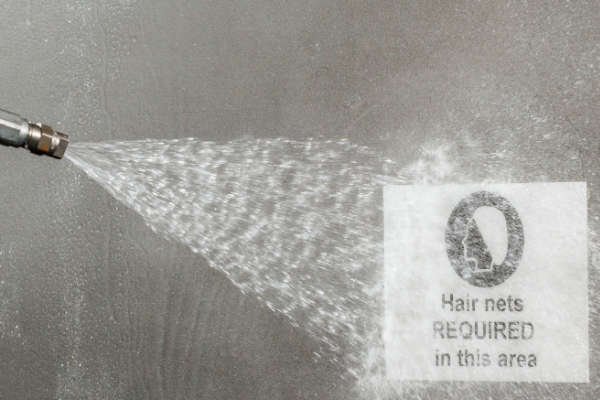
Now that we know what a standard lockout program contains, it's important to tailor the materials and processes for the food and beverage industry. The equipment and identification materials used in these facilities must survive frequent, intense washdowns that contain combinations of high-pressure water, steam and chemicals.
For example, standard tags that are paper-based will deteriorate, become illegible and turn into debris and contaminants. LOTO tags should be laminated, water-proof, highly durable and use chemical-resistant inks. Brady materials like ToughWash® Washdown Resistant Labels are specifically designed to maintain their integrity and clarity through multiple, rigorous cleaning cycles.
Minimize contamination risk with the right materials
While rust or wear might be acceptable elsewhere, in food production, any corrosion or foreign material contamination is a direct threat to consumer safety and can trigger costly recalls.
Use padlocks that are non-porous and corrosion resistant
LOTO padlocks and hasps used in sterile areas must be made from non-porous, easily cleanable materials that will not corrode. This includes padlocks that are made of:
- Stainless steel or aluminum
- Non-porous plastic
- FDA-approved grease
Check out Brady Velocity© Padlocks to satisfy these requirements. Additionally, devices must not be painted in order to prevent flaking as well as able to be cleaned without contributing to corrosion. Replace items immediately that show signs or wear or corrosion.
Add labels, signs and tags with metal detectability
Some of the most innovative solutions for the food and beverage industry are labels, signs and tags with metal detectability. These products are engineered with tiny metallic particles embedded within the non-metal material. This simple but effective design ensures that if a component breaks off, it will be detected by metal scanning equipment on the line to stop production and prevent contamination before the product leaves the facility.
Add sanitation steps into your LOTO procedures
Written energy control procedures (ECPs) should account for sanitation requirements. Your ECPs should answer questions around the following key considerations:
- Pre-Lockout Sanitation: Does food product or residue need to be completely removed from the area before a lock is applied?
- Tool Sterilization: If LOTO devices or tools are not permanently stored in the sterile area, do they need to be sterilized before being brought in?
- Cross-Contamination Protocol: Do you need to take extra precautions, such as laying down plastic sheeting, to prevent tools from introducing contaminants to adjacent storage or production zones?
- Post-Lockout Cleanup: What is the required sanitation and cleaning process after the LOTO devices are removed?
Ensure employees can access procedure documentation at the point of lockout. Where paper-based procedures aren't an option, consider metal-detectable QR code labels combined with digital safety software for access on a mobile device.
Maintain compliance, safety and sanitation with Brady
Following food-safe requirements and correctly implementing lockout tagout go hand in hand. Brady has the products and expertise to help you apply them confidently and in compliance.
Lockout Products
Check out our full lineup of lockout tagout padlocks, hasps, devices and more. Made from durable, compliance-driving materials, including FDA-approved grease in Velocity Padlocks, our products are purpose-built for the job at hand.
Safety Services
A typical lockout program contains over 40 elements. The experts at Brady Safety Services can deliver a customized program using one service or a combination of services, including Visual Lockout Procedure Writing, Gap Analyses, Authorized Employee Training and more to keep you safe and compliant.
LINK360® Software
Manage, store and sustain your program with intuitive LINK360 safety software. This single, centralized cloud-based solution lets you create visual energy control procedures with best-in-class templates, facilitate execution, review and audits, plus much more.