Requirements for Eyewash Stations
2 min read
The eyes are one of the most sensitive, vulnerable parts of the body. A small splash of the wrong chemical or a stray particle can cause permanent damage. If your workplace contains hazardous materials or produces harmful airborne particles, OSHA likely requires you to provide an eyewash station.
OSHA standard 29 CFR 1910.151(c) requires that eyewash stations and safety showers are required “where the eyes or body of any person may be exposed to injurious corrosive materials.” It further requires that these stations be in the work area and available for immediate use. For specific minimum requirements, they direct employers to ANSI/ISEA Z358.1 standard.
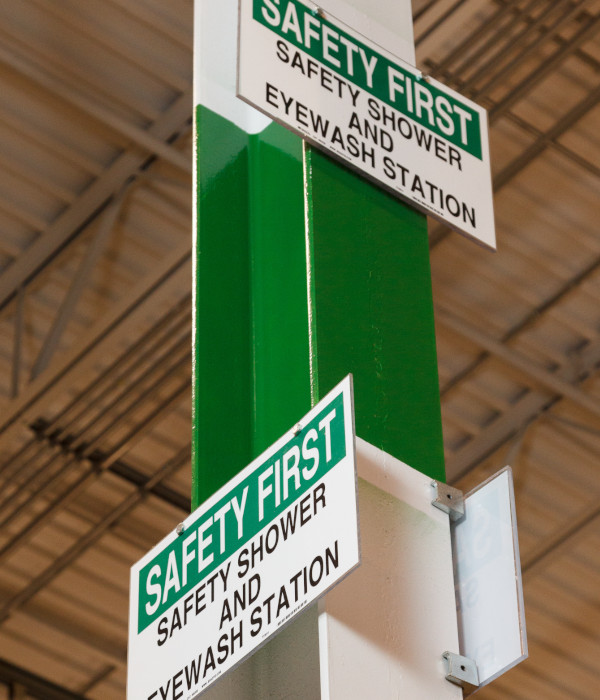
- Location: Eyewash stations must be located within 55 feet, or approximately 10 seconds for where hazardous materials are used or stored. The location needs to be on the same level as the hazard, eliminating the need to climb or descend stairs and be easily accessible and free of any barriers or obstructions.
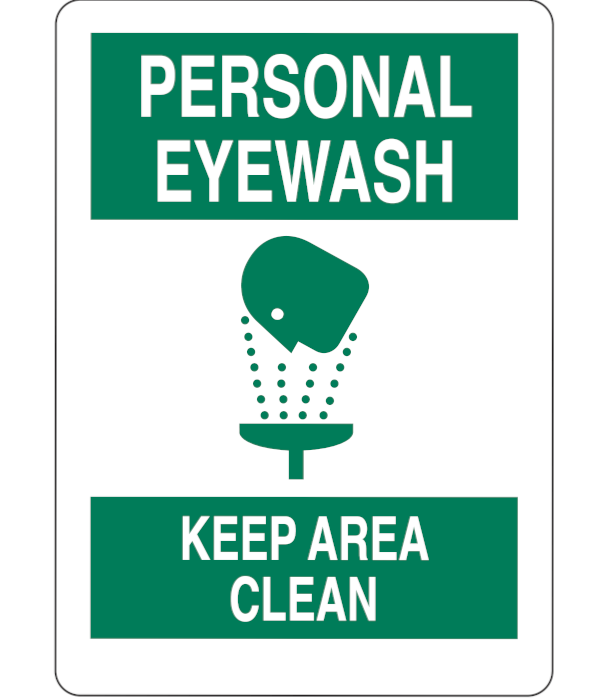
- Proper signage: Eyewash stations must be clearly marked with highly visible signs so employees can quickly locate them in an emergency.
- Water temperature and flow rate: Eyewash stations should provide a continuous flow of clean, potable, tepid water. The water needs to be between 60-100 degrees Fahrenheit and flow at a rate of at least 0.4 gallons per minute for 15 minutes.
- Nozzle height and material requirements: Eyewash nozzles need to be 33-53 inches from the floor. The nozzles must also be made of a corrosive-resistant material and kept free of rust, dirt, and debris.
- Operation, training and inspection: Eyewash stations need to be operable without the use of hands, usually by foot pedal. Employees should be trained on proper use, including how to activate the water flow. Additionally, stations should be regularly inspected to ensure they are clean and functional.
Eyewash stations are a key part of any safety and first aid planning. Proper planning and maintenance can help provide a safe working environment and minimize risk of employee eye injury. Brady can provide the proper signage for your eyewash stations, along with other safety services to help keep your organization compliant.