
How to Choose the Right Industrial Barcode Scanner
What makes a barcode scanner an industrial barcode scanner?
Selecting hardware for an enterprise environment requires understanding the physical demands of the workspace. Standard retail scanners are built for climate-controlled spaces with minimal physical hazards and simple use. Industrial-grade scanners feature specialized engineering designed to survive harsh conditions.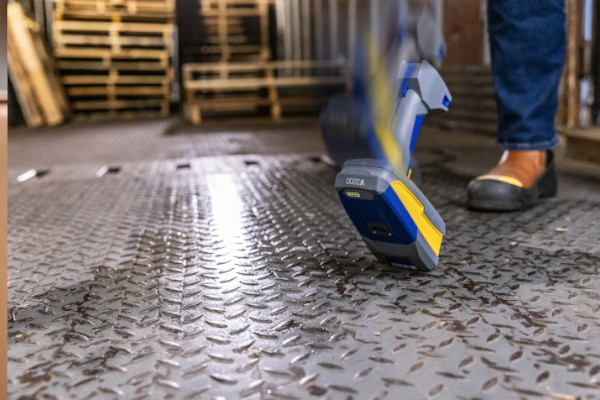
Physical Durability Features
- Drop and Shock Resistance: Industrial units are tested to ensure they survive drops and crushes and use specialized materials to prevent cracks and breaks.
- Industrial Seals: Rubberized overmolds protect vital internal electronics, optics and battery connections from heavy vibrations and direct impacts.
Understanding IP Ratings
Ingress Protection (IP) ratings classify the level of environmental protection an electronic device maintains against solids and liquids. The rating consists of two digits. The first digit denotes the device’s protection against solid particles, like debris and dust. The second number shows the device’s resistance to liquids:| 0 | No protection |
| 1 | Protected against objects 50 mm and larger (e.g., accidental hand touches) |
| 2 | Protected against objects 12.5 mm and larger (e.g., fingers) |
| 3 | Protected against objects 2.5 mm and larger (e.g., tools) |
| 4 | Protected against objects 1 mm or larger (e.g., wires or screws) |
| 5 | Dust protected — limited amounts may enter the unit, but will not interfere with operation |
| 6 | Dust tight — complete protection against dust particles |
| 0 | No protection |
| 1 | Protected against vertically falling drops of water |
| 2 | Protected against drops when tilted up to 15 degrees |
| 3 | Protected against spraying water from vertical to 60 degrees |
| 4 | Protected against water splashed from all directions |
| 5 | Protected against low-pressure water jets |
| 6 | Protected against strong water jets |
| 7 | Protected against the effects of immersion up to one meter for 30 minutes |
| 8 | Protected against the effects of immersion over one meter for longer periods of time |
| 9k | Protected against close range, high-pressure and high-temperature water jets |
For example, if a barcode scanner has an IP54 rating, it may let dust into the unit, but it won’t affect the operation. Additionally, the general-purpose scanner could protect against water sprayed in any direction, but would likely malfunction if submerged in water.
For typical warehouse environments, an IP65 rating provides protection against airborne dust and low-pressure water streams. Sometimes, you will see scanners listed with IP65 as well as IP67/IP68 ratings. The IP67/68 are rated for full immersion in water.
High-velocity washdown facilities or heavy outdoor applications require IP69k ratings to protect internal components during deep cleaning cycles. It’s difficult for a scanner to be rated for both high-pressure jets and full immersion as the seals are designed differently.
Types of Industrial Barcode Scanners
Facility managers must select a primary device form factor based on structural workflows and physical space limitations.Fixed Mount Scanners
Fixed mount units are secured to a single location, such as a conveyor belt frame or automated sorting line. They operate hands-free and use high-speed automated imaging to capture barcodes as items pass by on the production line. While these scanners offer high-speed scanning, the trade-off is some inflexibility in item and barcode positioning.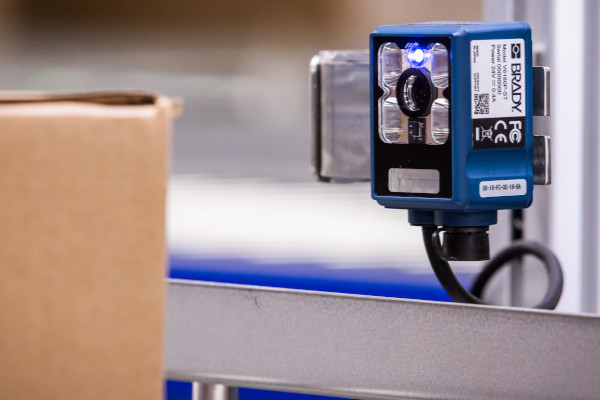
Handheld Wired Scanners
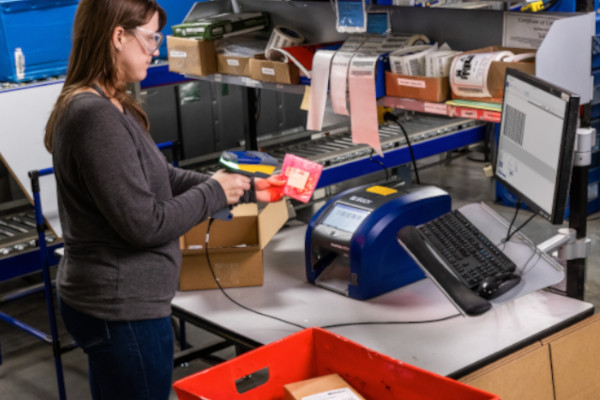
These traditional devices connect directly to a stationary terminal or vehicle-mounted computer via a physical cable — often by USB. They provide constant power supply and immediate data transmission without battery management.
The obvious tradeoff here is that wired scanners leave the user less mobile. If the job requires you to move throughout a warehouse or between workstations, a wired scanner isn’t going to work.
Handheld Wireless Scanners
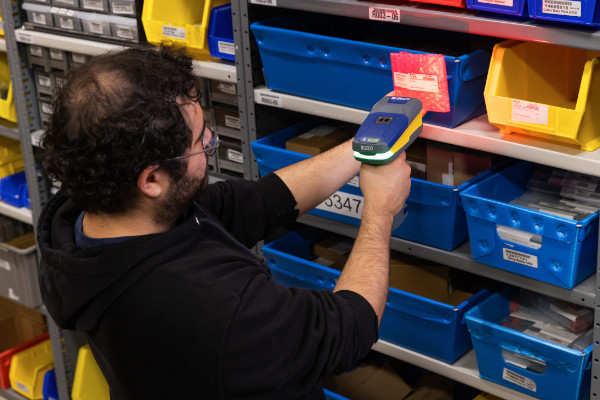
Wireless models utilize Bluetooth or industrial Wi-Fi networks to transmit data back to a central host computer. Usually, there is an internal memory component that stores the data and allows for batched uploading.
Wireless scanners usually operate on rechargeable lithium-ion battery packs and allow users to move freely. Some models offer secure wired data transfer as well as swappable battery packs for maximum flexibility.
Choosing the Right Hardware
Choosing the correct hardware configuration requires analyzing your facilities' physical architecture and operational metrics.Fixed vs. Handheld
- Fixed Mount applications: Ideal for high-volume, automated transit environments. Choose a fixed system when consistency, line-speed and unmanned tracking are your primary goals.
- Handheld applications: Necessary when items are irregularly shaped, oriented randomly or require human inspection during the scanning process. Handheld units provide flexibility for workers managing diverse, unexpected inventory configurations.
Wired vs. Wireless
- Wired configurations: Best for static packing stations, assembly lines and point-of-sale desks. The physical wire restricts movement to a specific area, preventing equipment loss and minimizing network security vectors.
- Wireless configurations: Necessary for forklift operations, large-scale picking yards and inventory audits. Operators can scan heavy pallets directly on the floor without moving the items to a terminal, reducing physical strain and improving cycle count speed.
FAQs
Why would I need a keypad with my industrial barcode scanner?
Built-in keypads are highly beneficial when operators need to input manual data alongside a scan (such as entering quantities), change bin locations or confirm damaged packages. For workflows that only require point-and-shoot data collection, a standard trigger-only scanner minimizes weight and reduces potential entry errors.
What is an IP Rating?
IP ratings denote a device’s protection against solids and liquids. It is a two-digit system where the first digit denotes the protection against solids and the second digit denotes the protection against liquids.
What IP rating is required for dusty warehouses vs. washdown facilities?
- Dusty warehouses: An IP65 rating is generally sufficient. It prevents fine particulate matter from crossing the exterior shell and disrupting the internal components. Brady industrial barcode scanners all have an IP65 rating.
- Washdown facilities: Food processing, pharmaceutical and chemical cleanrooms require an IP67 or IP69K rating. These ratings ensure the scanner housing can withstand high-pressure, high-temperature sanitization sprays without internal condensation.
Why are there drop-to-concrete resistance measurements as well as tumble and crush ratings?
Industrial environments present different kinds of potential impact damage for barcode scanners.
- Drop ratings measure sudden, intense contact with the ground
- Crush resistance describes how well the unit withstands pressure
- Tumble resistance details the unit’s ability to withstand ongoing jostling and repetitive stress
All Brady industrial barcode scanners are rated for multiple 8-foot drops, 250 pounds of crush resistance and 2,500 meters of tumble resistance.
How do low-temperature environments (like freezers) affect scanners?
Standard batteries experience rapid voltage drops in freezing conditions, and optical lenses can fog up instantly when moving between varying temperature zones. Cold-storage models utilize specialized low-temperature batteries and frost-free seals to preserve functionality down to -4°F (-20°C).How long should the battery last on my wireless industrial barcode scanner?
You generally want your barcode scanner to last through an entire shift. If you need the scanner to last through multiple shift changes, consider an scanner that has a swappable battery.What are DPM (Direct Part Marking) codes and why do they require special optics?
DPM codes are etched, laser-engraved or dot-peened directly into the surface of materials like metals, plastics, wood, glass or ceramics rather than printed on paper labels. Because these surfaces are often highly reflective or low-contrast, standard scanners cannot easily read them.
DPM-optimized scanners utilize specialized multi-axis lighting arrays and advanced decoding software to diffuse reflections and clearly isolate the marked code. Some scanners can be configured to read DPM codes in different lighting conditions.